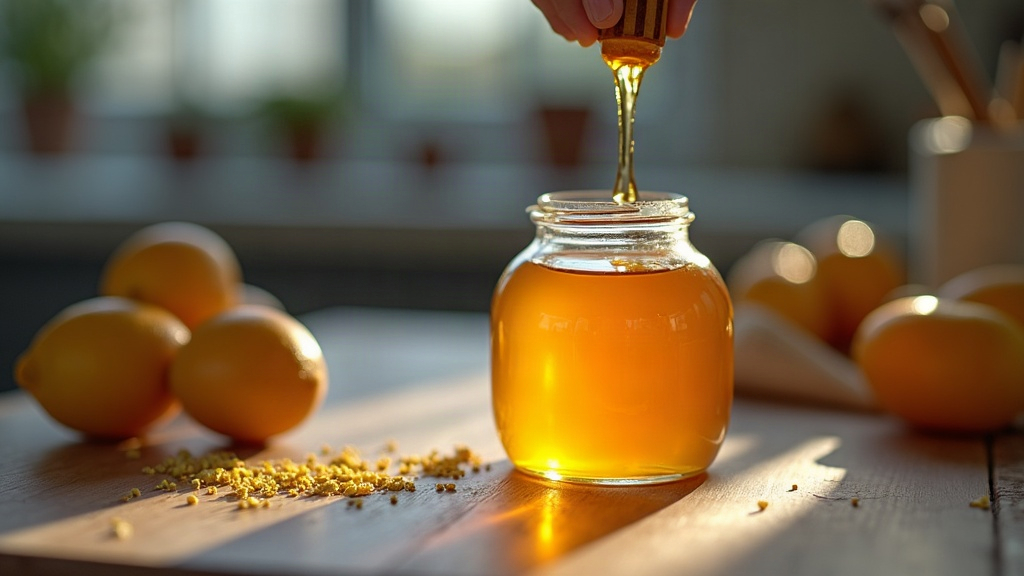
You expected sharper mornings and clearer conversations by now. Instead, names slip and focus wanders. Before you chalk it up to “just getting older,” take a closer look at how raw honey has quietly been part of daily rituals for centuries — and why so many people over 50 are paying attention to it again.
Here’s the gap between what you expected and what actually happens: nobody warns you that the brain’s daily maintenance needs change quietly, year after year. Before jumping to conclusions, it helps to understand what’s really going on under the hood — including why ingredients like honey keep coming up in these conversations.
Cellular turnover slows gradually, and the brain is no exception — the shift is subtle, not sudden, which is why it often goes unnoticed until it's already familiar.
Deep sleep stages shorten with age, and that's exactly the window your brain uses to file away the day's information.
Chronic low-grade stress doesn't announce itself, but it steadily competes for the same mental resources you rely on for focus.
Appetite and absorption both change over time, making it easier to miss the small nutrients that support everyday mental clarity.
So much of what circulates about memory after 50 is repeated so often it starts to sound true. Let’s separate the noise from what’s actually understood.
Forgetting things occasionally means something is seriously wrong.
Occasional lapses are common at every age and are not automatically a sign of a larger issue — context and frequency matter.
Once your memory starts changing, there’s nothing you can do about your daily habits.
Daily routines, rest, and diet all play a documented role in how the brain functions day to day, at any age.
Natural ingredients like honey are just old folklore with no real relevance today.
Many traditional ingredients are being studied with modern methods, and honey is one of the ones drawing renewed curiosity.
This isn’t a treatment plan — it’s a practical way of thinking about the small daily choices that shape how your mind feels.
Spend a week simply noticing your patterns — sleep, meals, stress spikes — without trying to fix anything yet.
Pick a single small change, like an earlier bedtime or a more consistent breakfast, and give it real time before adding another.
If you’re curious about something like honey, take the time to understand where it comes from and why it’s part of this conversation — informed curiosity beats blind trend-following.
Honey has been part of daily life across cultures for thousands of years, long before anyone had the tools to study it in a lab. It shows up in old texts, kitchen traditions, and folk remedies passed between generations — usually valued simply as a natural sweetener with a long shelf life. What’s changed recently isn’t the ingredient itself, but the level of modern attention being paid to traditional staples like it, as researchers revisit ingredients that were once dismissed as “just tradition.”
The insight worth sitting with: something doesn’t need to be new to be worth understanding better. Curiosity about long-standing traditions is not the same as a promise about what they can do for you.
Frequently forgetting what you were just saying, more than what feels normal for you personally.
Finding everyday objects in places that don't make sense, on a recurring basis.
Feeling unexpectedly unsure about routines you've done for years without a second thought.
Needing instructions repeated or written down far more than you used to.
Avoiding gatherings because keeping up with conversation feels more tiring than it used to.
Friends or family gently mentioning changes you hadn't noticed yourself — worth taking seriously, not personally.
These are individual experiences shared for illustrative purposes only. Names have been changed. Results and experiences vary from person to person, and none of these statements should be viewed as a guarantee.
No. This content is educational and explores a topic of interest — it does not diagnose, treat, cure, or prevent any condition.
Honey has a long history in traditional daily routines across many cultures, which is why it’s frequently referenced in conversations about long-standing habits.
Yes, always. Any changes to diet, supplements, or daily habits should be discussed with a qualified healthcare professional, especially if you have existing conditions.
Mild, occasional lapses are common and not automatically a sign of a serious issue, though patterns of change are worth discussing with a professional.
This page presents educational content and may link to further information. Any product-related decisions should be based on your own research and professional guidance.
It’s designed to be watched in one sitting and covers the background, context, and details referenced throughout this page.
Interest in traditional ingredients has grown, and researchers continue to study them. This page does not present specific studies as proof of any outcome.
Watch the full presentation to understand the background, the traditions, and the reasoning — without pressure, and without promises.
Advertising Disclosure: This page contains sponsored content and affiliate links. We may receive compensation if you make a purchase or take action through links provided on this page. This does not affect the price you pay and helps support the content we provide.
Content Disclaimer: This content is provided for educational and informational purposes only. It has not been evaluated by the Food and Drug Administration. It is not intended to diagnose, treat, cure, or prevent any disease or condition. Always consult a qualified healthcare professional before making changes to your diet, lifestyle, or supplement routine.
Results Disclaimer: Individual results vary. Testimonials and experiences shared on this page are personal accounts and are not a guarantee of any outcome for any individual.
© 2026 · All Rights Reserved · /contact/